Captain Simeon Samson
1736 - 1789
One of the first naval captains commissioned by Massachusetts, commander of the legendary Brig Independence, and a hero of the American Revolution
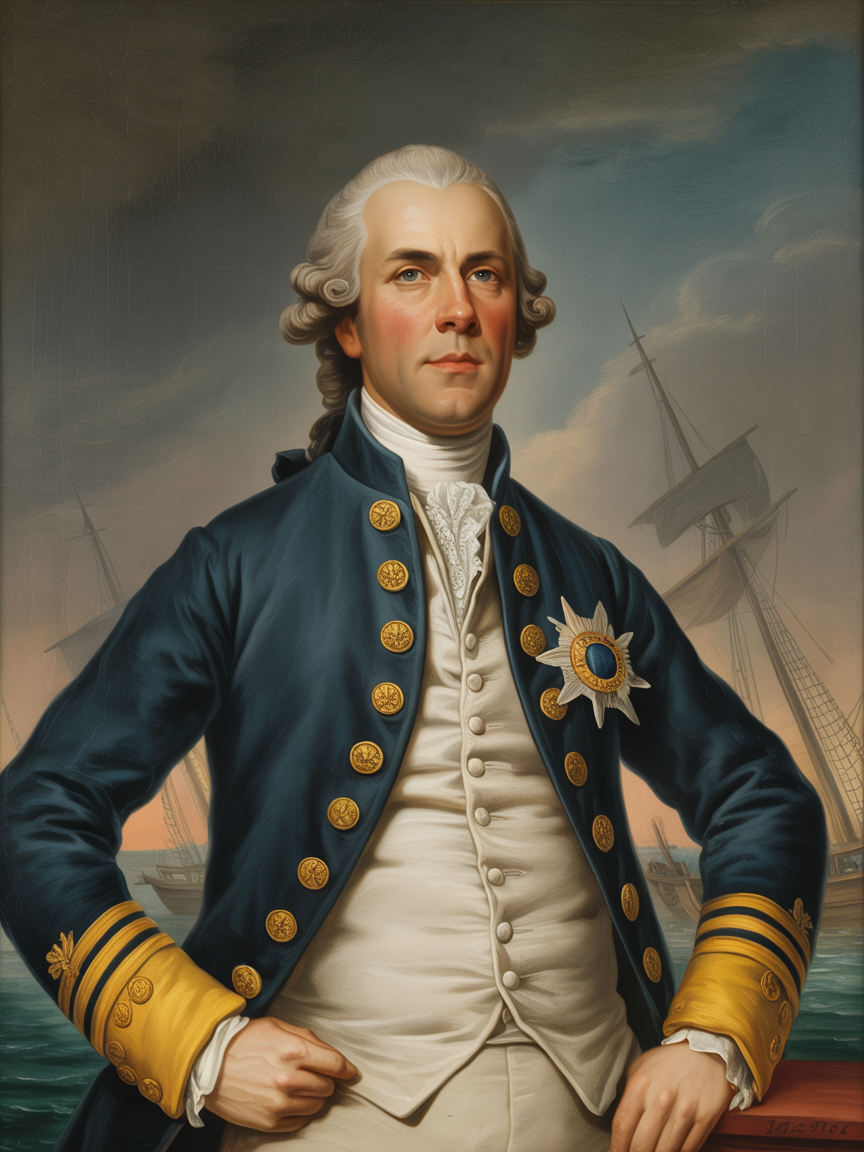
Leading Naval Captain
Massachusetts State Navy
A Profile in Courage
Captain Simeon Samson was a pivotal figure in the early naval history of the United States and a prominent son of Kingston, Massachusetts. Appointed as one of the first naval captains by the Massachusetts Provincial Congress during the Revolutionary War, Samson demonstrated exceptional skill, bravery, and dedication to the Patriot cause.
He oversaw the construction of the brig Independence in his hometown of Kingston and commanded it on successful cruises before its capture. His service continued throughout the war at the helm of several other state and national vessels, where he captured numerous British prizes and undertook critical diplomatic missions.
After the war, he retired to a modest life, but his contributions cemented his status as a celebrated military leader and a key figure in Kingston's rich maritime history. His career exemplifies the crucial role that coastal Massachusetts towns and their seafaring citizens played in securing American independence.
Early Life and Maritime Beginnings
Simeon Samson was born in Kingston, Plymouth County, Massachusetts, in August 1736 to Peleg and Mary (Ring) Sampson. Raised in a region with a deep seafaring tradition, he embarked on a career as a mariner in the merchant service, operating out of nearby Plymouth.
His early years at sea were not without peril. In 1762, while serving on a vessel, he was captured by the French. Held as a hostage for a ransom payment, Samson engineered a daring escape by disguising himself as a woman—a testament to the resourcefulness and intrepid character that would define his later military career.
This pre-war experience provided him with invaluable skills in navigation and naval conduct, preparing him for the challenges of the impending conflict with Great Britain.
Key Facts
- Born: Kingston, Massachusetts, August 1736
- Parents: Peleg and Mary (Ring) Sampson
- Early career: Merchant mariner, Plymouth
- 1762: Captured by French, escaped in disguise
Distinguished Revolutionary War Service
From the first Massachusetts naval commission to diplomatic missions to France
Command of the Brig Independence
On April 17, 1776, Samson was formally appointed to command the armed brigantine Independence, built in Kingston on the Jones River directly under his supervision.
In the autumn of 1776, Samson led the Independence on a highly successful cruise, capturing five British prize vessels, including the ship Roebuck.
In November 1776, despite valiant conduct, the Independence was captured by HMS Hopeafter a fierce engagement. Samson was taken prisoner to Fort Cumberland near Halifax.
Subsequent Commands
After his eventual release, Captain Samson's service continued unabated. He was appointed commander of the brig Hazard, capturing several prizes including the vessel Live Oak.
In 1779, he commanded the packet ship Mercury, carrying vital dispatches to American ministers in France, returning during the harsh winter of 1780.
He was later promoted to command the Mars and the Warren, capturing the British flagship Trial.
Career Timeline
Born in Kingston, Massachusetts to Peleg and Mary (Ring) Sampson
Captured by French; escaped by disguising himself as a woman
Appointed one of the first naval captains by Massachusetts Provincial Congress
Ordered to cruise against British enemies
Captured five British prize ships including the Roebuck
Brig Independence captured by HMS Hope
Commanded the Hazard, Mercury, Mars, and Warren
Carried dispatches to American ministers in France
Died in Plympton; later reinterred on Burial Hill, Plymouth
Family, Legacy & Final Years
Family Life
Simeon Samson was married to Deborah Cushing of Hingham, Massachusetts. Together they had twelve children, though seven died young. His surviving children included Lydia Cushing Goodwin, Deborah Samson, Mercy Samson, Marie Samson, and George Washington Samson.
He was also a cousin to Deborah Sampson, the celebrated Massachusetts woman who disguised herself as a man to serve in the Continental Army.
Death & Remembrance
At the conclusion of the Revolutionary War, Captain Samson retired from service. In 1788, he sold his mansion in Plymouth and purchased a farm in Plympton. He died there of apoplexy on June 22, 1789, at the age of 52.
He was initially buried on his farm, but his remains were later moved to a marked grave on Burial Hill in Plymouth. His epitaph honors him as a "loving Husband," "tender Father," "generous Friend," and a man with a "dauntless heart yet touch'd at human woe."
Historical Recognition
Captain Samson is remembered as a Patriot Ancestor by the Daughters of the American Revolution and is represented in the Society of the Cincinnati. His life story—from merchant mariner to celebrated war hero—is a powerful chapter in Kingston's contribution to America's founding.
Discover the Brig Independence
Learn more about the legendary warship that Captain Samson commanded—built on Kingston's Jones River and immortalized on the town seal.
Read the Full Story of the Brig IndependenceHistorical Sources
- • Find a Grave - Captain Simeon Samson Memorial (19249424)
- • Massachusetts Navy Records - AmericanRevolution.org
- • Bonhams Auction Records - Early American Naval Commission
- • Society of the Cincinnati - Officers Represented
- • Ships of Kingston - Town of Kingston Archives
- • WikiTree Genealogical Records